Meet the people behind TENTACLE
TENTACLE is powered by a diverse and dedicated team of students, researchers, engineers, and professionals who contribute their expertise every day. This page highlights the individuals working behind the scenes: their roles, their motivations, and the unique skills they bring to the project.
By sharing their stories, we aim to showcase the collaborative spirit that drives our work forward and makes European research truly impactful.
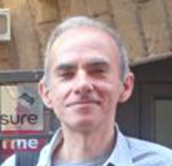
Giovanni Vozzi (Full Professor)
Giovanni Vozzi is a Full Professor of Bioengineering at the University of Pisa and the director of the Biofabricatio Lab at the “E. Piaggio” Research Center. He is internationally recognized for his pioneering work in bioprinting and the development of advanced multi-scale fabrication technologies for tissue engineering. His research focuses on creating “smart” scaffolds that mimic human organs by integrating mathematical modeling with innovative 3D and 4D manufacturing
Role in TENTACLE:
Scientific Coordinator
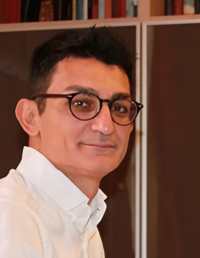
Valentina Calderai (Associate professor)
Valentina Calderai is an Associate Professor of Private Law, Comparative Private Law and AI Law Applied to Biomedicine at the University of Pisa, where she coordinates the Private Law curriculum of the Doctoral Programme in Law and chairs the Democracy hub Circle-U Alliance. She holds a master’s degree in philosophy from the University of Urbino, a master’s degree in Law from the University of Florence, and a PhD in Private and Comparative Law from the Sant’Anna School of Advanced Studies.
She is currently the coordinator of the Jean Monnet Chair, ‘Health Law and Development in the European Union’ (HeLDEn, 2023–2026), which is funded by the European Commission. She also serves as Principal Investigator for the ‘A Legal Framework and Feasibility Study for Open Access Biobanks’ project (ALeF, 2023–2025), which is funded by the Italian Ministry of University and Research.
Her research interests include European private law, consumer protection, the regulation of biotechnologies and the market for reproductive services.
Her recent publications include The Regulation of Health Technologies. A European Perspective (with C. De Maria), Pisa University Press, 2025, and ‘The Self and the Commodified Self: Biotechnologies before the Bare Life’, in H. W. Micklitz and G. Vettori (eds.), The Future of the Person, Hart Publishing, 2025.
Role in TENTACLE:
Her contribution focuses on the regulatory and legal framework governing the development and future market access of the TENTACLE colonoscopic bio-implant, including: compliance with the EU Medical Device Regulations (MDRs), the legal implications of integrating AI-driven monitoring into the device, regulatory requirements for novel biomaterials, ethical and data protection issues arising from patient-specific customisation and in-situ bioprinting procedures.
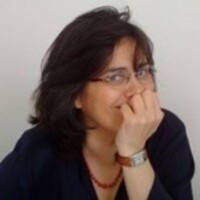
Carmelo De Maria (Associate professor)
Carmelo De Maria is an Associate Professor in Bioengineering at the Dept. of Information Engineering of the University of Pisa (Italy) and carries out his research in the Biofabrication Laboratory of the Center “E. Piaggio” of the same Institution. He is the author of several peer-reviewed papers, and he is involved in research projects funded by public and private entities, focused on the AI-enhanced 3D/4D printing of biomaterials and biological materials for the development of advanced therapies and innovative medical devices.
Role in TENTACLE:
Carmelo is leading WP3: “WP3 Design of the colonoscopic bioprinter”, contributing to the design and validation of the innovative TENTACLE colonoscopic bioprinter.
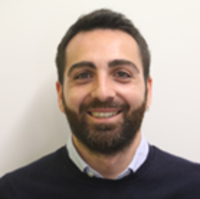
Gabriele Maria Fortunato (Assistant professor in Bioengineering at the Dpt. of Information Engineering)
Gabriele Maria Fortunato is Assistant Professor at the Dpt. of Information Engineering and fellow of the Research Centre “E. Piaggio” (University of Pisa). His research focuses on hardware and software development for robotic-based in situ bioprinting technologies. He also works on advanced manufacturing techniques and their integration to fabricate multiscale and multimaterial scaffolds for tissue engineering applications. Additionally, he is involved in the design and development of bioreactors and in vitro models, as well as open-source medical devices.
Role in TENTACLE:
In Tentacle he will be involved in the design and validation of the lab-scale colonoscopic bioprinter and in the implementation of in silico tools for planning the in situ 4D bioprinting process.
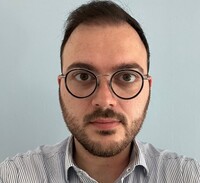
Irene Chiesa (PostDoc Researcher)
A bioengineer by training, Irene Chiesa is currently a postdoctoral research fellow at the Enrico Piaggio Research Center at the University of Pisa. Irene earned her PhD from the Department of Information Engineering at the University of Pisa, focusing on the use of 4D printing in tissue engineering and medical device design. She is currently engaged in cutting-edge research in the field of in situ 4D printing applied to the regeneration of the colon-rectum.
Role in TENTACLE:
In Tentacle, I am leading WP5 “In silico tools for in situ 4D bioprinting process”, towards the definition of a in silico suite for the personalization of the bioprinting procedure and its quality control.
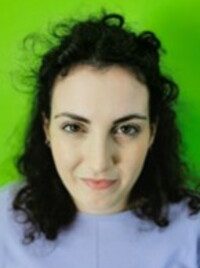
Mauro Di Stasi (Postdoctoral Researcher, PhD)
Mauro Di Stasi is a postdoctoral researcher at the University of Pisa with expertise in cellular pharmacology and biomedical engineering applied to advanced biomaterials. His research focuses on the chemical characterization, extraction, and biological evaluation of novel materials, including marine- and non-marine–derived polysaccharides and other natural compounds. He develops 3D bioengineered skin and ocular tissue models using advanced scaffolds to study inflammation, aging, toxicity, and therapeutic responses. He holds a PhD in Pharmaceutical Sciences and integrates skills in cell culture, natural product pharmacology, and analytical chemistry.
Role in TENTACLE:
Scientific consultant for the assessment of biological effects of materials before and after the printing process. His activities include the evaluation of cytocompatibility, inflammatory and toxicological responses, and functional cellular outcomes induced by printed and non-printed materials using advanced in vitro tissue models.
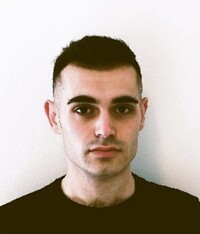
Edoardo Bilancia (PhD student)
Edoardo Bilancia is a Bionics Engineer with a foundational background in Computer and Automation Engineering. Currently a PhD researcher, he specializes in the ground-up design, prototyping, and development of novel biomedical devices for in-situ tissue regeneration. His role involves the comprehensive development of both hardware and software architectures for these first-of-their-kind delivery systems. His expertise spans a wide range of technical fields, including multi-technique 3D printing, mechanical fabrication, electronics, coding, and advanced 3D modeling. By integrating engineering innovation with translational medicine, he works in close collaboration with clinical teams to develop bespoke surgical tools for colorectal applications. His research is dedicated to bridging the gap between laboratory development and clinical practice to enhance post-operative recovery and patient quality of life.
Role in TENTACLE:
Responsible for the design, prototyping, and development of the new colonoscopic bioprinter that will allow the in-situ regeneration of the intestinal mucosa and submucosa. He’s involved in the design of both hardware and software for planning the delivery of advanced bioinks developed within the project, and quality control of the regenerated tissues.

Debby Laukens (Full Professor)
Debby Laukens is professor of Experimental Gastroenterology at Ghent University (Belgium) and Principal Investigator of the IBD Research Unit at the department of Internal Medicine and Pediatrics. Her research focuses on chronic intestinal inflammation – particularly inflammatory bowel disease (IBD) – and explores the central role of the gut in neurological conditions such as Parkinson’s disease and behavior-related disorders. One of her key areas of expertise is the in vitro and ex vivo modeling of the gut mucosa.
Role in TENTACLE:
In TENTACLE, she will lead the cell biology activities, with a particular emphasis on assessing the biocompatibility of intestinal cells. In addition, she will coordinate the proof-of-concept studies for in situ bioprinting within a preclinical framework, including the first-ever evaluation of the bioprinting tool in relevant animal models, enabling a comprehensive assessment of its feasibility, safety, and biological performance in vivo.
Sandra Van Vlierberghe (Professor and Group leader)
Prof. Dr. Sandra Van Vlierberghe is Research Professor at Ghent University within the Polymer Chemistry & Biomaterials Group. Her research focuses on the synthesis, modification and processing of photoresponsive and photo-crosslinkable polymers, including hydrogels and thermoplasts, serving biomedical applications including tissue engineering, drug delivery and biofabrication. She holds extensive expertise in polymer processing technologies including extrusion- and light-based 3D-printing (two-photon polymerization, digital light processing, volumetric additive manufacturing) as well as electrospinning. She obtained her PhD in Sciences in 2008 and has authored over 335 peer-reviewed publications. Prof. Van Vlierberghe is actively involved in international scientific organizations, serves on several editorial boards, and is co-founder of two spin-off companies in the field of bioinks and regenerative medicine.
Role in TENTACLE:
Prof. Dr. Sandra Van Vlierberghe leads work package 4 which focuses on the design and formulation of advanced biomaterials for the regeneration of colorectal mucosa and submucosa, including the implementation of smart functionalities (carriers and grid structures), the assessment of printability, and comprehensive in vitro evaluation. She is also involved as partner in work packages 1, 2, 6, 9 and 10.
Rui Pedro Santos Silva (PhD student)
Rui Pedro Silva is currently a PhD student within the Polymer Chemistry & Biomaterials Group, with an academic background in Biomaterials and Nanomedicine (MSc) and Biochemistry (BSc) from NOVA University of Lisbon. His master’s thesis was carried out at TU/e Eindhoven (the Netherlands), focusing on the synthesis and 3D printing of synthetic polymers.
Role in TENTACLE:
Rui Pedro Silva is involved in work package 4 being responsible for the chemical synthesis and distribution of photocrosslinkable hydrogel precursors and poly(alkylene terephthalates (PAT) to the different project partners. He performs the mechanical characterization of the materials and evaluates their crosslinking efficiency prior to extrusion-based 3D-printing and in vitro testing. He is involved as partner in work packages 1, 2, 6, 9 and 10.
Thomas Benoot (PhD researcher)
Thomas Benoot is currently a PhD researcher in the Gastroenterology Laboratory under the supervision of Prof. Debby Laukens. He holds a bachelor’s degree in Biomedical Laboratory Technology from University College Ghent and a master’s degree in Biology – Molecular and Cellular Life Sciences from the Vrije Universiteit Brussel. His master’s thesis opened the door to a research position in the same laboratory, where he spent three years working on colorectal and lung cancer. After gaining experience in industrial research in Ghent, he realized he missed the academic environment, which ultimately led him to pursue his PhD.
Role in TENTACLE:
Thomas Benoot contributes to multiple Work Packages within the project, including WP4, WP6, and WP9. His work focuses on the in vitro biological validation of newly developed biomaterials and 4D‑bioprinted structures. In addition, he is involved in both small‑ and large‑animal in vivo studies, supporting the translation of the project’s innovations toward preclinical relevance.
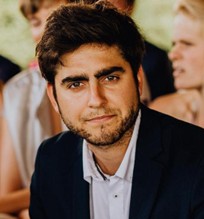

Alberto Arezzo (Full Professor of Surgery)
General Surgeon with 35 years of experience in minimally invasive techniques, including robotics, transanal endoscopic surgery, and operative digestive endoscopy. Chair of the Multi-Disciplinary Treatment (MDT) team for ColoRectal Cancer at the University of Turin, Città della Salute e della Scienza Hospital. Elected General Secretary of the European Association of Endoscopic Surgery (EAES), which has around 5,400 members. On April 4th, 2025, nominated President-Elect of the European Association of Endoscopic Surgery (EAES). On May 1st, 2025, appointed a member of the European Surgical Association (ESA).
Educated and trained at the School of Surgery of the University of Tuebingen (Germany), under the guidance of Prof Gerhard Buess, pioneer of minimally invasive and robot-assisted surgery. Worked as Assistant Professor first and Associate Professor then, at the University of Turin, Department of Surgical Sciences under the guidance of Prof Mario Morino, also a pioneer of minimally invasive and robot-assisted surgery. Nominated Distinguished Full Professor of Surgery by the Rector of the University of Turin. Principal Investigator in 8 European Projects in FP5, FP6, FP7, H2020, and HEU, 4 of which are ongoing (CLASSICA, PALPABLE, TENTACLE, and DAEDALUS). Co-Principal Investigator of a HEU ERC Synergy Project (ERC SyG-2023 #101118626),
ENDOTHERANOSTICS (Multi-sensor Eversion Robot Towards Intelligent Endoscopic Diagnosis and Therapy) in collaboration with King’s College London, Queen Mary University London, and Federico II University of Naples (www.endtheranostics.com).
Awarding of approximately 85 million euros in funding for his research proposals, of which more than 23 million euros for his institution. 6 international patents registered or pending on microrobotics and endoluminal therapies. Author of 359 publications on Scopus (ID: 6701795382), H-index 57, 10.687 citations. ORCID: 0000-0002-2110-4082. Editor-in-Chief of Minimally Invasive Therapy and Allied Technologies Journal (Impact Factor 2.0). Coordinator of the Doctorate Course in Bioengineering and Medical-Surgical Sciences, inter-university in collaboration with the Polytechnic of Turin. Coordinator of the research activities of the Minimally Invasive Therapy and Innovation Center (MITIC) at the Department of Surgical Sciences of the University of TURIN (www.miticlab.com).
Role in TENTACLE:
Principal investigator
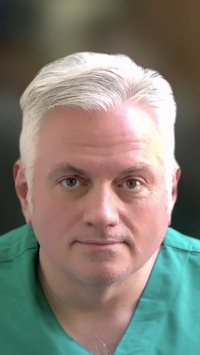

Wouter Beenker (Scientist and Project manager)
Wouter has a background in biomedical sciences with a MSc in Neuroscience and Cognition from Utrecht University and a PhD in Molecular Microbiology from the Hubrecht Institute. At Scinus Cell Expansion, Wouter combines hands-on experience in the lab with his project expertise to support successful outcomes.
Role in TENTACLE:
Scinus Cell Expansion is responsible for upscaling cell production using their proprietary Osilaris™ bioreactor platform. This way, sufficient patient-specific cells can be generated from a small biopsy for use in the bioprinting.


Carla Daniele (Research Director at CN IATIS at the Italian National Institute of Health (ISS))
She is an electronic engineer with expertise in biomedical engineering. She started her researcher activity in 1992 at the ISS studying the performance of implantable medical devices in the cardiovascular system (valves, prosthetic vessels, annuloplasty devices, and to implement experimental techniques (Laser Doppler Anemometry, High Speed Cinematography).
International and national scientific collaborations, research projects and scientific publications.
She has consolidated expertise in artificial intelligence applied in healthcare, medical devices regulations, and digital health.
She is actively involved in national and European research programmes (PNRR, Horizon Europe), with a particular focus on AI‑based Medical Device Software (AI‑MDSW), telemedicine, digital twins, 3D bioprinting, and health data interoperability (EHDS, XtEHR)
Her expertise also includes biomaterials, tissue regeneration and additive manufacturing (bioprinting, scaffolding) as well as combined products under (Regulation n. 1394 on Advanced Therapy Medicinal Products). She has in-depth knowledge of medical devices Regulations (Regulation (EU) 2017/745 and Regulation (EU) 2017/746), and of standardization processes. Her research activity has addressed nanotechnologies and their impact on health, with a focus on the use of nanomaterials in medical devices. In the field of tissue engineering and regenerative medicine, polymeric scaffolds, including 3D scaffolds, were investigated for application in regenerative medicine to promote cellular tissue growth.
In the area of digital innovation, with expertise in artificial intelligence and 3D printing (combined and personalized products), she collaborates to the project D34 Health – “Digital Driven Diagnostics, Prognostics and Therapeutics for Sustainable Healthcare” (PNRR_PNC), which involves the development of patient ‘digital twins’ and ‘biological twins of organs or tissues’”. Member of CEN/CENELEC Focus Group on Organ-on-Chip Standardization. Scientific Lead for multiple medical device projects involving the ISS and the Italian Ministry of Health, with a particular focus on clinical investigations of medical devices. She is author of scientific publications in international and national journals. (Carla Daniele (0000-0003-3799-9519) – ORCID)
Role in TENTACLE:
She collaborates to Project TENTACLE “Innovative in situ 4D bioprinting for regeneration of colorectal mucosa and submucosa” contributing to Work Package2 “Clinical, regulatory, and end-users requirements”, with the identification of the relevant European Regulations and International standards.
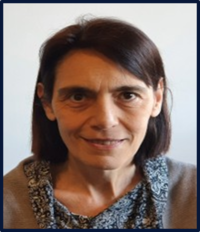
Giuseppe D’Avenio (Senior researcher at the Center for Innovative Technologies in Public Health, Istituto Superiore di Sanità (ISS); MSc Electronic Engineering at the Sapienza University in Rome)
Research activities – Fluid dynamical and biomechanical characterization of implantable devices (prosthetic heart valves, prosthetic vessels, stents). Hemodynamical characterization of Fontan circulation, i.e., surgical palliation of univentricular heart condition. Numerical simulations on patient-specific models. Optical methods for the assessment of structural integrity of biological valve prostheses. Application of machine/deep learning to topics related to image processing and segmentation (echocardiography and MRI). Experimental characterization of nanoparticle-induced biological effects. Analysis of regulatory requirements of medical devices, including AI-based MDSW. Characterization of the European regulatory framework for Organs-on-chip (see recent publication of the Roadmap issued by the CEN/CENELEC Focus Group on OoC). Scientific responsible in 4 EC-funded research projects (including TENTACLE). (Orcid no.: 0000-0002-9717-2487)
Role in TENTACLE:
The main contribution to the Project TENTACLE relates to Work Package 2 “Clinical, regulatory, and end-users requirements”, with the identification of the relevant European Regulations and International standards. Within WP2, contribution to D2.1 and D2.2.